AM I ALLOWED TO SAY THIS?
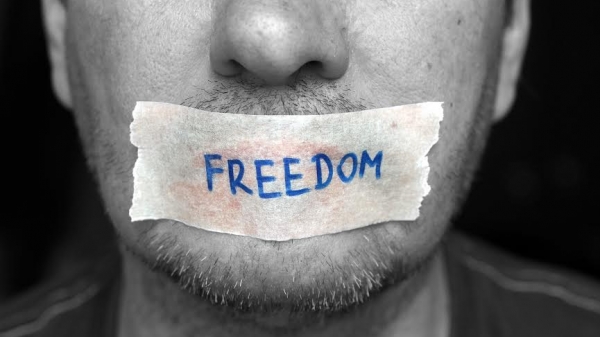
Is freedom of speech still a real, functioning right, or has it been eroded by social dynamics, moral self-censorship, and ideological compartmentalization?
I remember a time when I spoke my mind freely, on almost any subject, regardless of what others thought. Whether my views aligned with widely accepted theories or not hardly mattered. I even enjoyed playing devil’s advocate, defending positions I didn’t personally support, simply to see where a discussion might lead. For a long time, I considered this an essential part of the marketplace of ideas.
In recent years, however, I’ve noticed myself growing more reluctant to exercise that freedom. I still listen to the conversations around me, but I increasingly refrain from participating, avoiding the very real risk of escalation. Rather than openly disagreeing — or worse, questioning an accepted position — I choose silence. And by doing so, I’m painfully aware that I help reinforce the very consensus I hesitate to challenge.
What strikes me most is that these conversations almost always take place among like-minded people. There is no genuine debate about fundamentals, only minor — often irrelevant — disagreements at the margins.
Somewhere along the way, I seem to have lost my perceived right to speak — not by law, but by context. I regret that deeply, yet feel strangely powerless to counter it. Before the internet became the dominant medium of communication, people talked openly. They agreed to disagree. Banter was understood as banter, not automatically interpreted as insult. Respect was earned in conversation, not enforced by law or by an unspoken social contract.
Social media changed that dynamic entirely. Where people once went to the pub to exchange ideas, platforms have taken over that role. The crucial difference is that behind a keyboard — without facing the other person — it is far easier to say whatever comes to mind. The result is a widening gap between viewpoints, one that increasingly feels too large to bridge.
I cannot be alone in this. There must be many who seriously question the value of freedom of speech as a fundamental human right. That right — enshrined in international treaties such as the European Convention on Human Rights (Article 10) — includes the freedom to form, seek, receive, and impart opinions. Crucially, it also protects the right to express views that may offend, shock, or disturb.
At the same time, this freedom is not absolute. It can be restricted by law, for instance in cases of incitement to hatred, discrimination, violence, or the denial of genocide.
Isn’t this where things begin to collide?
We are told we have the right to offend, shock, and disturb. Yet the less people with opposing views engage with one another rationally, the quicker words are perceived as deeply insulting. In such an environment, interpreting an insult as incitement — to hatred, discrimination, or racism — becomes remarkably easy, especially when one is firmly entrenched on what feels like moral high ground.
As legal interpretation becomes increasingly sensitive to offence and perception, culture inevitably follows. What begins in courtrooms does not stay there; it seeps into universities, workplaces, and everyday conversations. The result is self-censorship — and a quiet, accumulating frustration. The law however does not need to silence anyone — society will do it for her when it is ready.
A movement that defends those who deviate from what was once considered the norm — whether one chooses to call it woke or not — and who have historically suffered discrimination, deserves recognition and respect. That corrective impulse is necessary.
Trouble begins when such a movement turns inward and becomes intolerant itself, excluding anyone who does not fully subscribe to its worldview. Why dismantle the shackles of old bigotry only to replace them with new ones?
This recent rise of cancel culture and informal, soft censorship has arguably caused more harm than insults ever could. Not because words no longer matter, but because fear of social punishment increasingly replaces open disagreement.
So how do we break this spiral? Ironically, by returning to what we seem to have lost: genuine dialogue. A conversation that excludes no one by default. Left or right, progressive or conservative — it matters less than our willingness to engage.
I’m open to disagreement. I might not agree with you, and yes, I may say something clumsy or even crude at times. But never without respect. And I ask the same in return. Don’t hold back. I can take it.
What I miss is not consensus, but conversation. Messy, uncomfortable, but necessary.


Comments
Post a Comment